The Beauty of Damascene Mother-of-Pearl Craftsmanship
Why a material cut from shell has defined the rooms of Damascus for centuries — and why it still stops people mid-sentence.
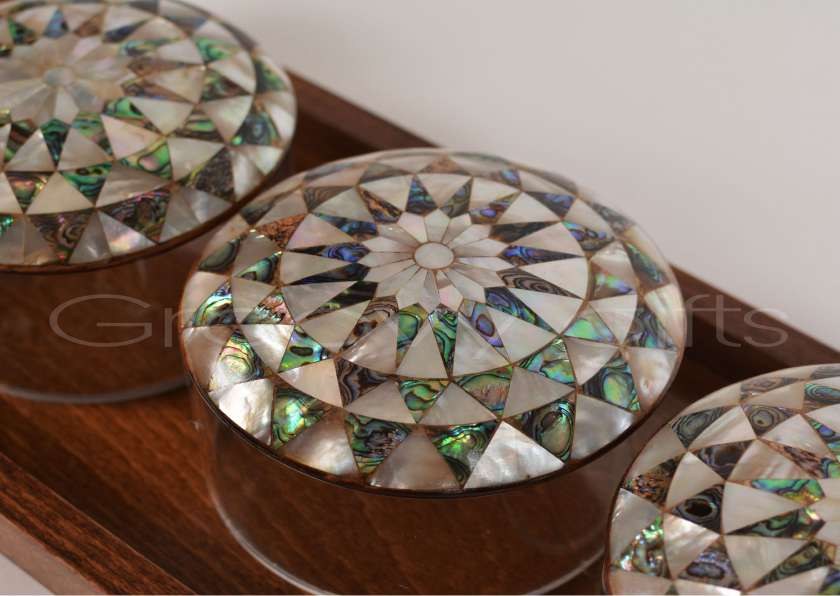
Mother-of-pearl inlay begins with a shell and a patient hand. The shell is cut into small pieces — stars, petals, diamonds — each one shaped to fit a cavity carved into walnut. No two pieces catch the light the same way, which is why a pearl-inlaid surface seems to move as you walk past it.
In Damascus, this craft is inseparable from the city's identity. The geometric stars and floral arabesques that cover our boxes, tables and mirrors follow patterns handed down through workshops, not drawn from books. The small variations between pieces are not flaws; they are the signature of the hand that made them.
When you choose a mother-of-pearl piece, you are choosing something that will outlast trends. Treated gently — kept from harsh sun, dusted with a soft cloth — pearl keeps its lustre for generations.